Safety starts before the broker call
The safest place to stop a bad trade is before it reaches the broker. That means validation should happen before live execution: command parsing, symbol resolution, account readiness, order-value checks, product checks, and confirmation verification.
A system should not rely on the broker API alone to catch every issue. Broker validation is important, but the product layer should also protect users from malformed commands, stale approvals, and duplicate requests.
The guiding rule is to block first and explain clearly when a workflow is ambiguous.
Human confirmation
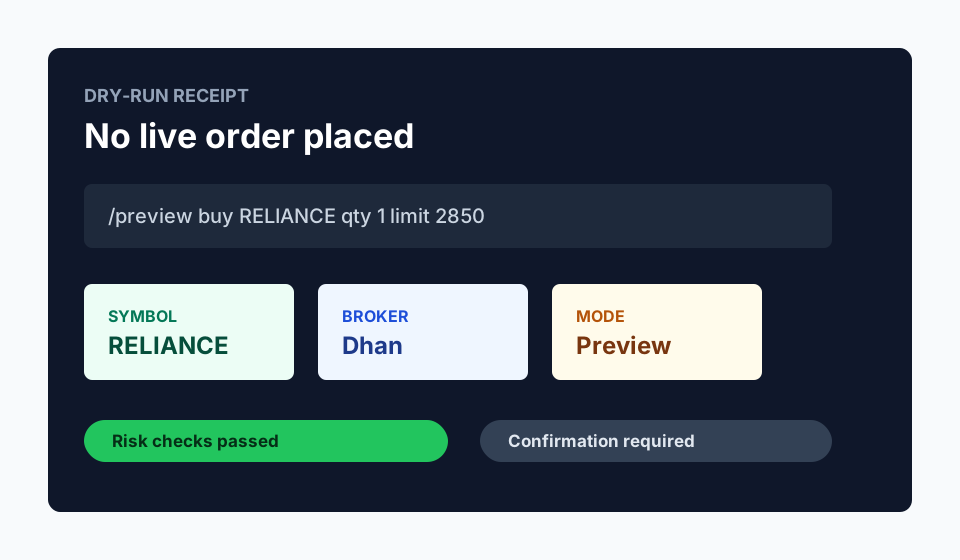
Human confirmation is the boundary between assistance and execution. The confirmation screen or message should show the parsed order in plain language and structured fields, not just a generic yes/no prompt.
The confirmation should expire quickly, bind to one payload, and be invalidated when the command changes. This protects against stale chat messages and accidental reuse.
For higher-risk workflows, confirmation can also require additional checks such as order-value warnings or live-trading readiness prompts.
Risk controls
Core controls include maximum order value, maximum quantity, symbol whitelist, duplicate guard, stale command rejection, dry-run default, broker readiness gate, and kill switch. These controls should be visible to users and testable in dry-run mode.
A duplicate guard should recognize repeated payloads within a short window. A symbol whitelist should prevent commands from resolving to unsupported or unintended instruments. A kill switch should immediately block new live execution.
Controls should be logged. If a command is blocked, the user should see why.
Audit logs
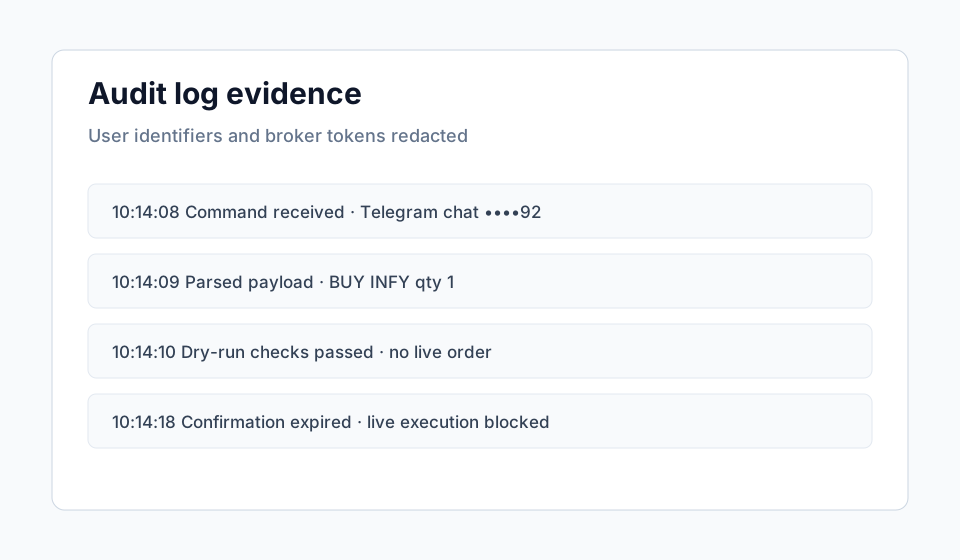
Audit logs are the record of what the user asked, what the system understood, what checks ran, what the user confirmed, and what the broker returned. They are essential for debugging, user trust, and operational review.
A useful audit log should avoid secrets while preserving enough detail to reconstruct the workflow. Redact tokens and sensitive identifiers, but include timestamps, command IDs, validation states, and broker response summaries.
Audit logs should be available to users in a readable format, not only hidden in backend logs.
Credential security
Broker credentials should be encrypted, access-controlled, redacted from logs, and never rendered on public pages. The system should prevent tokens from leaking through analytics events, screenshots, or error messages.
Credential rotation and revocation should be part of the operational plan. When a token is invalid or suspected to be exposed, the product should block live execution until the issue is resolved.
Evidence and screenshots to add before final publication
FAQ
Does safe AI trading remove market risk?
No. It reduces operational and workflow risk. Market risk remains.
What is the most important control?
Dry-run plus human confirmation is the central control because it prevents unreviewed live execution.
Should blocked commands be logged?
Yes. Blocked commands are important evidence for debugging and user review.