What AI trading automation actually means
AI trading automation combines natural-language interfaces, structured order parsing, broker APIs, and risk controls. A user may type a command in Telegram, ask an AI assistant to format an instruction, or use a dashboard to stage a broker action. The automation layer should convert that input into a precise payload only after validating symbol, quantity, side, product type, order type, price fields, and account readiness.
The safest design separates suggestion from execution. AI can help draft, summarize, and explain. Deterministic software should validate. The trader should confirm. This separation matters because language models can misunderstand intent, hallucinate missing fields, or produce plausible text that is not suitable for a live broker request.
For Vantaro, the operating principle is simple: trade by command, execute with control. Commands are treated as drafts until they pass dry-run checks and receive explicit user approval.
- Use AI for interpretation and workflow assistance.
- Use deterministic checks for broker payload validation.
- Use human confirmation for live execution.
A safe AI trading workflow
A safe workflow starts with a command, not an order. The system parses the command, resolves the symbol against an approved instrument universe, checks whether the broker connection is ready, applies user-level risk limits, and returns a dry-run receipt. The receipt should show what would happen, what will not happen yet, and which conditions must be met before live execution.
Only after the user confirms should the system call the broker execution endpoint. The confirmation should be tied to the exact parsed payload, expire after a short period, and be unusable for a different command. This prevents stale approvals, duplicate submissions, and accidental execution from old messages.
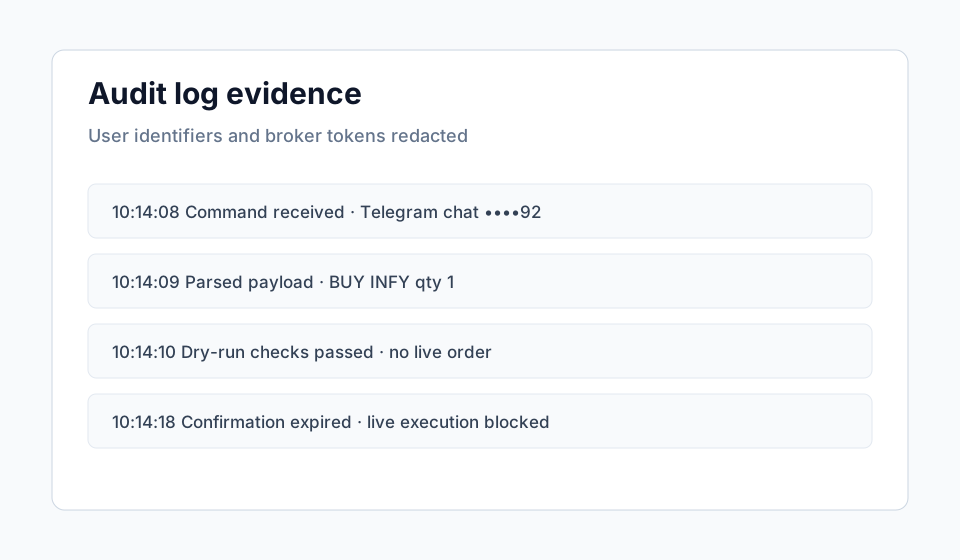
Every step should be recorded in an audit log. The log should include the original command, parsed intent, validation result, dry-run payload, confirmation state, broker response, and timestamps. This gives the user a factual trail instead of relying on memory or chat history.
AI trading vs algo trading
Traditional algo trading usually follows explicit rules: if a condition is met, perform a defined action. AI-assisted trading is different. The AI layer may help interpret a user request, format an order, summarize risk checks, or translate a command into structured fields. That flexibility is useful, but it also requires stricter guardrails.
A rule-based strategy can still fail, but the failure mode is usually tied to code, data, or market conditions. A language-model-assisted workflow can fail because the instruction was ambiguous, the model inferred a field incorrectly, or the user relied on generated text as if it were advice. That is why broker-connected AI systems should not be built as unreviewed autopilots.
The practical comparison is not AI versus automation. The better comparison is unguarded automation versus reviewed automation. Vantaro's architecture is designed around the reviewed version.
Dhan and Telegram example
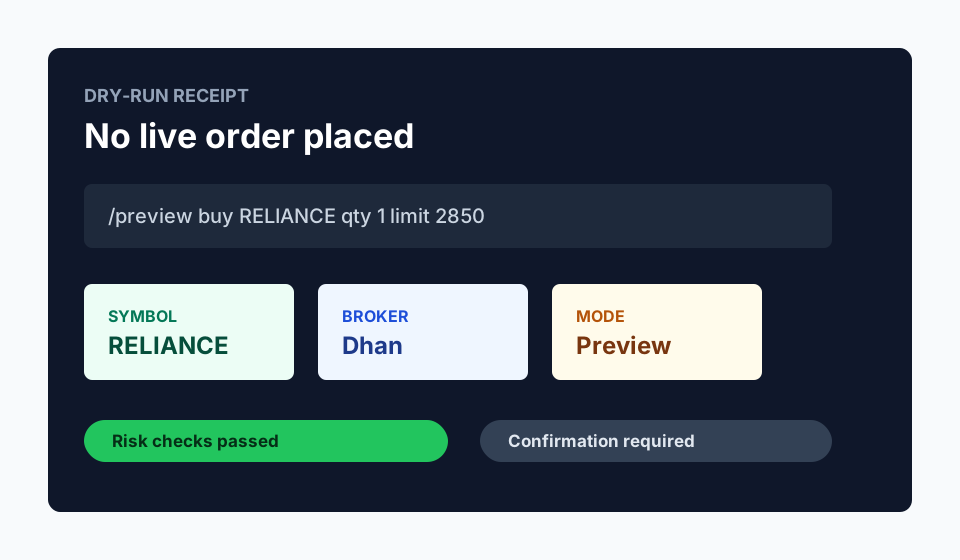
A trader sends a Telegram command such as: /preview buy RELIANCE qty 1 limit 2850. The system identifies the command as a preview request, resolves RELIANCE to the relevant instrument, checks whether Dhan credentials are present, verifies whether live trading is enabled, and applies order-value controls.
The reply should not say that the trade has been placed. It should return a dry-run receipt: action, symbol, quantity, order type, price, broker account, validation checks, and confirmation options. If the symbol is unsupported, the token is expired, or static IP readiness is incomplete, the system should explain the blocker and keep live execution unavailable.
This approach still gives speed. The trader avoids manually filling repeated forms. But the critical decision remains visible and confirmable.
Operational risks to control
The most important risks are not only market risks. They are operational risks: wrong symbol, wrong quantity, duplicate order, expired token, unsupported instrument, stale confirmation, and unclear command parsing. A serious product needs controls for each one.
For AI-assisted workflows, the system should reject ambiguous commands rather than guessing. It should cap order value, enforce symbol whitelists where configured, detect duplicate payloads, record audit events, and give users a kill switch that blocks new live orders.
These controls do not remove trading risk. They reduce preventable workflow mistakes.
Evidence and screenshots to add before final publication
FAQ
Is AI trading automation the same as a trading signal service?
No. This guide focuses on workflow automation, command parsing, dry-runs, and execution controls. It does not recommend trades.
Can AI place trades by itself?
A safe broker-connected workflow should require deterministic validation and explicit user confirmation before live execution.
What should I test first?
Start with dry-run commands, symbol resolution, order-size limits, duplicate guards, and audit log review before enabling any live workflow.