What models can do safely
General-purpose models can help transform a user instruction into a structured draft, summarize a broker setup checklist, explain the difference between access tokens and API keys, or format a Telegram command example.
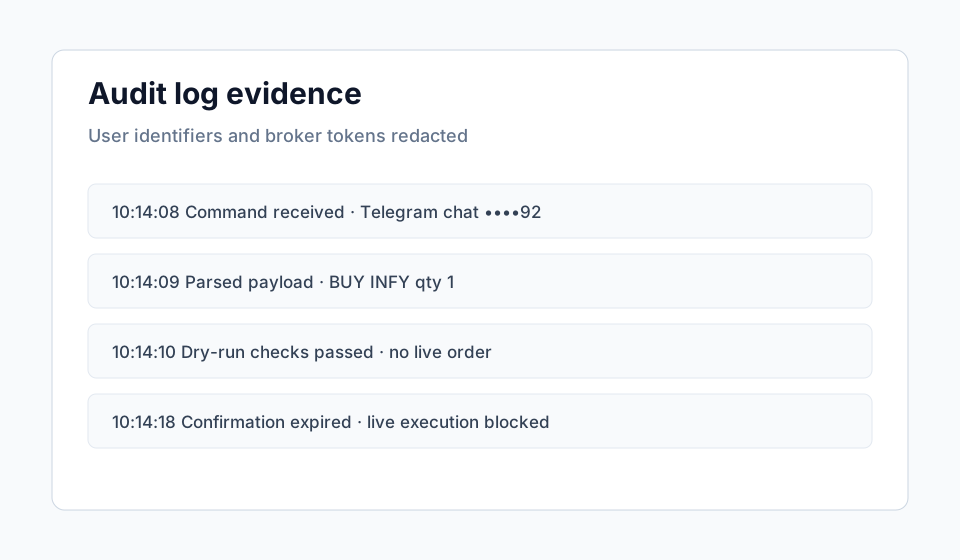
They can also help a user understand audit logs or identify which setup step might be missing. These tasks are workflow assistance, not investment advice.
The useful boundary is clear: models can draft and explain, but deterministic systems must validate before execution.
What models should not do
Models should not invent trades, recommend securities, promise returns, bypass user confirmation, or call broker APIs directly. They can produce confident text even when context is missing.
A broker-connected system should treat model output as untrusted input. The output must go through parsing, validation, risk checks, and user confirmation before it can affect live orders.
This is especially important when users refer to popular model brands in search queries. Content should answer the query without implying official integrations or autonomous execution.
Safe comparison framework
Compare models by workflow fit: instruction clarity, formatting quality, ability to explain constraints, privacy posture, and ease of review. Do not compare them by claimed trading performance unless there is rigorous, first-party, reviewed evidence.
For trading automation, the safer question is not which model can trade best. The safer question is which workflow keeps control, review, and auditability intact.
Vantaro approach
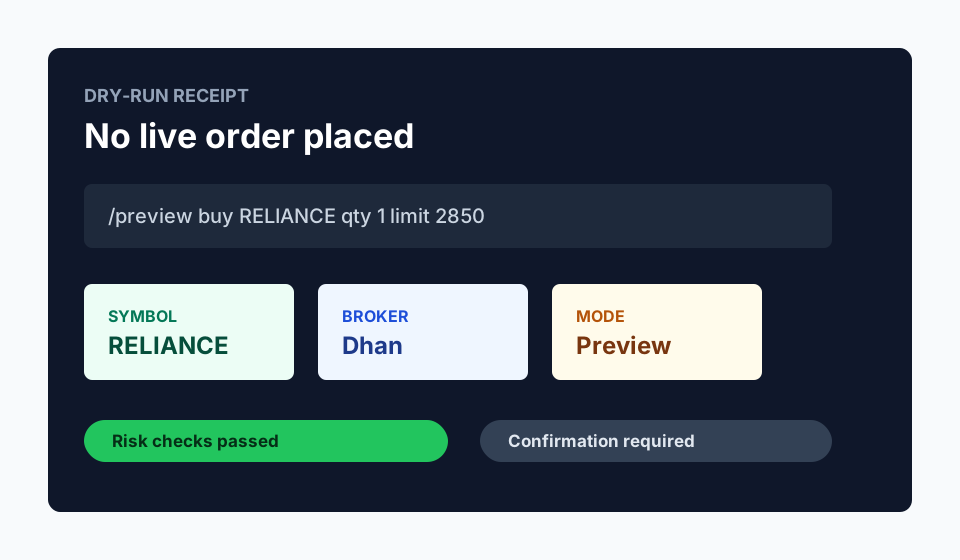
Vantaro can use AI assistance as a drafting and interpretation layer. Broker-connected execution remains behind dry-runs, deterministic validation, confirmation gates, and audit logs.
This keeps model usefulness while avoiding the dangerous claim that a chatbot should run a trading account on its own.
Evidence and screenshots to add before final publication
FAQ
Does this page imply official integrations?
No. It discusses safe workflow patterns for model-assisted trading automation.
Can model output be used as an order?
Only after deterministic validation, dry-run preview, and user confirmation.
Is model-generated trading text investment advice?
No. Vantaro content is educational and does not recommend specific trades.